Sunday, 10 August 2014

Dehydratation

I hadn't really planned my visit well enough it seems. I came to Cambodia at the beginning of April and I learned that this is one of the hottest time here. I have trouble staying hydrated in the best of conditions. In Cambodia, this became almost impossible.

I did try. I carried a bottle with me all the time. I forced myself to drink from it even when I wasn't thirsty. It wasn't enough and soon it became worrisome.

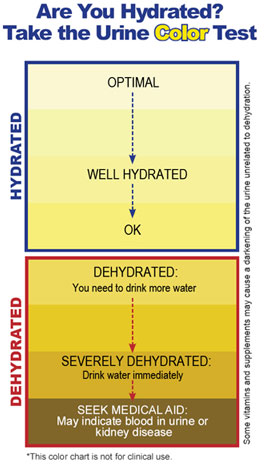
I know no one wants to hear urine talk, but somehow I feel I can't avoid it. Urine can be a good indicator of severe dehydration and dehydration is something we all face at one point or another of our travels. In my case, as my days in Cambodia went by, I noticed my my urine got darker and darker, until finally it got to be a very dark shade of brown and I couldn't ignore it any longer. I realized that I might just have to go to the hospital. I don't really like hospitals and I didn't really feel confident about hospitals here. So, being pigheaded as I tend to be, I gave myself one day to either somehow manage to improve things or head to the hospital.

(Reference: Free Drinking Water)


Thankfully, the rooms in my hostel had AC. Not very strong AC, but AC none the less. The rooms were still hot, but it was better than being out there in the sun. So I spent one day inside, forcing myself to drink as much water as I could and taking cold showers to cool off. I rested the rest of the time. Then, the next morning I noticed the color had paled a bit. So I decided to venture outside in the morning and come back at noon to spend the hottest part of the day in the AC. Then at night, I would venture out again. I really calculated my water intake and forced myself to drink every half an hour.

By doing this, I did manage to solve the problem. However, I fully realize this was a very close call for me.

Another good sign of dehydration is the lack of urine. That is one thing I experienced for two days in the Australian Outback (again I was there during the middle of their summer). That time I did drink a lot of water, it just wasn't quite enough. It is said you have to drink one liter per hour when you are in the desert.

Why was I less worried that time in the desert? First, everybody in my group was the same. Second, I knew I had very limited time in the heat. Finally, I didn't have any other symptoms, I felt perfectly fine.

For Cambodia, I knew I was going to remain in those conditions for a while, long enough for it to become a problem. Next, I did feel lethargic and nauseous. To tell you the truth, my body just felt wrong. To me these were other indicators that it was not to be taken lightly and part of the reasons why I was considering seeking medical attention.

You should never overlook hydration, which I know can be quite easy when you travel. As my guide in the Outback of Australia used to say, if you feel thirsty, you are already dehydrated.


Friday, 8 August 2014

The Artisans of Angkor

I found the Artisans of Angkor almost by mistake. As I was walking from my hostel to the laundry lady on a side street, I saw signs for it and decided to pay them a visit.

They are so much more than your typical souvenir shop. The Artisans of Angkor are what we call a social enterprise. Their mission is to help illiterate and disadvantaged young Cambodians from rural areas. They recruit them and teach them traditional Khmer crafts, notably wood sculpture, silk painting and statue painting.

Once these kids are recruited as apprentice, they are trained free of charge and receive a living allowance for the duration of their training, which will in turn allow them to get a sustainable career. You can visit the installations for free and see the artisans at work.


They also have a boutique on site and I was astounded by the quality of the products sold there. Yes, I will be honest, they are more expensive than what you can find in the markets. Yet, between the quality they offer and the social contribution it makes, I had no hesitation. I rarely buy gifts when I travel, unless I find something truly special with specific people in mind. Let me tell you, I got quite a few things here - gifts for 4 loved ones still came less expensive than some gifts I bought in Europe for one person. When all is put in perspective, it's pretty good.

Wednesday, 6 August 2014

Doxycycline

When I went for my vaccinations before leaving for this trip, I was given doxycycline as a malaria preventive medication as there was a possibility I would be going to rural areas in risk zones.

A few facts: Malaria is a life-threatening disease caused by Plasmodium parasites transmitted through the bites of infected Anopheles mosquitoes, known as "malaria vectors". These mosquitoes bite between dusk and dawn. Most of the deaths attributed to malaria are among African children. Travelers from malaria-free areas that are not immune to the disease are very vulnerable when they get infected. Malaria is preventable and curable

As travelers, it might be a good idea to sleep with insecticide-treated mosquito nets. I found that in malaria areas, sometimes the nets were provided, sometimes not. You should not take it for granted. Also, insect repellant (bug spray) became my best friend in South East Asia. I don't want to sound all doom and gloom, but let's not forget that mosquitoes transfer other diseases as well, like the West Nile virus and the Dengue Fever (given, it depends on where in the world you are).

To learn more about malaria, like the drug-resistant parasites, click here.

I will be honest with you, I regret taking doxycycline and I eventually did stop it. I know this medication is often prescribed and shows very conclusive results. After all, there is a reason it was prescribed and I fully understand.

The problem was that the side-effects were really getting to me. I would get strong nausea that would last 1 to 2 hours after taking the medication. They would actually prevent me from going out sometimes. The sun sensitivity was also nothing like I had expected when I was first told that this might be a side-effect. I rarely get bad sunburns and when I do, it's because I really wasn't careful. This was something else. Unless I was fully covered I would burn. Sunscreen, no sunscreen, it didn't matter. It was painful and it made my skin look at least 30 years older. Let's be honest, I couldn't really completely cover because of the extreme heat.

(Photo sensitivity: This is what it looks like despite wearing FPS 50 sunscreen)


So yep, there you go, I really regret almost every single dose I took.

Tuesday, 5 August 2014

Word of the Day - Tuk-tuk

Carriages attached to motocycles which are used as taxi.


A few very relevant advices on tuk-tuks (I can testify to everything said in this article): http://goasia.about.com/od/GettingAround/a/Tuk-Tuks.htm

Points of interest, taken from the above article :
  • Tuk-tuks are open-air, so be ready for heat and plenty of exhaust from other vehicles.
  • Keep your bag(s) close. Thieves on motorcycles have been known to snatch bags from moving tuk-tuks.
  • Always, always agree on a price to your destination before getting inside of any vehicle -- especially tuk-tuks.
  • Hailing a passing tuk-tuk on the main street is often cheaper than accepting offers from drivers who are parked in front of tourist places.
  • With no seat belts, an accident in a tuk-tuk could be painful; keep your arms and legs inside!
And, yes, riding a tuk-tuk can be more expensive than taking a metered taxi, because it is easier to get cheated. To avoid overpaying, ask the reception of your hotel for how much you should expect to pay for your ride. The reception staff were always truthful to me. If not possible, find out the distance before hand, you will be more equipped to negotiate. In Cambodia, you should expect to pay a third to a fourth what a taxi costs in Canada.

Monday, 4 August 2014

Temples of Angkor

Like most, the temples were my main reason to come to Siem Reap. I decided to rent a bike to explore freely the ruins, up to this day I'm still not sure if it was a good or bad decision. Being in Cambodia at the hottest time of the years, biking proved to be challenging despite being rewarding. It felt like I just couldn't drink enough water to compensate for what I was losing. Also, some of the temples are quite far, as in 40 km away, so if you plan on seeing those ones you might want a driver. I know tuk-tuks hire out for 20$ to visit the temples, but I think they only cover the temples I have done not the faraway ones. You might want to hire out an actual driver with a car if you plan on seeing those.

Other tidbits of information to help you plan your visit: the entrance fee for one day is US$ 20 while you can get a ticket for three consecutive days for US$ 40 and for 7 consecutive days for US$ 60. Visiting hours are 5:00 AM to 6:00 PM. Your ticket will be checked anytime you try to go to a main temple, so always have it with you.

Also, they don't have debit machines or ATM machines on site. Bring the right amount of money. If you don't, don't let the guys tell you you have to go back to the city to get money. They don't care. Let me tell you, after about a 2-5 minutes bicycle ride, you will see a sort of mall on your left. Look there, there should be an ATM machine and it is well indicated. I went all the way back to the city on my bike and only saw this on my way back. I was not impressed.

Which brings me to an incident I feel I should share with you. One thing I noticed here, is that people who don't normally deal with tourists are the kindest you can imagine. Now, the bigger the tourist attraction, the rudest the staff. This made the staff of the temple complex among the rudest I have encountered in all my years of travel. Here, I had my first taste of rude at the Royal Palace of Phnom Penh. That had not fully prepared me for the behavior I would encounter at the ticket office of the temple complex.

After biking all the way back to the city in the heat, I felt I should inform them that there is an ATM a mere 2 minutes away, so that they would not send tourists all the way back to the city anymore. Now, I've replayed the events back in my head and I am 100% sure I was not threatening, aggressive or in any way rude. The man started screaming at me and getting really aggressive, to the point I was the one that had to politely ask him to please calm down. Eventually, when I saw that I couldn't reason with him and that he was not about to stop screaming, I just walked away. Later I looked for a place to lodge a complaint, but I'm sure it will come to you as no surprise that there is no such mechanism in place.

If you want to enjoy your time in the complex, deal with the staff as little as possible.

Now, let's talk temples!

Angkor is one of the main archeological sites of South East Asia. Spreading over 400 km2 and partly covered by forests, this archeological park boasts exceptional ruins of the previous seats of the Khmer Empire when it was at its peak between the IXth and the XVth centuries. This includes the well known Angkor Wat temple and the royal city of Angkor Thom.

Angkor Wat is probably the best known temple of the complex. It was a finalist for the New 7 Wonders of the world, but didn't actually make it to the official list. It is the largest temple of the complex and it is best viewed at sunset. It is thought to be a representation of the cosmic world. The central tower rising from the center of the monument symbolize the mythical mountain, Meru, situated at the center of the universe. The five towers stand for the peaks of Meru. The outer wall corresponds to the mountains at the edge of the world, and the surrounding moat the oceans beyond. Cosmic representations seem to be a recurrent theme in most of the temples.

 (Angkor Wat, did I mention the hoards of tourists?)

Angkor Thom was the last capital of the Khmer Empire and was a fortified city enclosing residences of priest, officials and military, as well as administrative buildings. These structures were made of wood and have rotten away. A causeway leading to the entry tower is flanked by two row of 54 stone figures. This would be 54 demons on the right and 54 gods on the left, resulting in a total of 108 mythical beings guarding the city. The demons have a grimacing expression and wear military headdresses while the gods look serene and wear conical headdresses.

Zhou Daguan, a Chinese emissary, described the splendor of Angkor Thom in the following way: "At the center of the Kingdom rises a Golden tower Bayon flanked by more than twenty lesser towers and several hundred stone chambers. On the eastern side is a golden bridge guarded by two lions of gold, one on each side, with eight golden Buddhas spaced along the stone chambers. North of the Golden Tower of Bronze [Baphuon], higher even than the Golden tower. a truly astonishing spectacle. With more than ten chambers at its base. A quarter of a mile further north is the residence of the King rising above his private apartments is another tower of gold, These are the monuments which have caused merchants from overseas to speak so often of 'Cambodia the rich and noble'"


The Bayon was definitely a favorite of mine. It is located in the center of Angkor Thom, about 1,500 m from the South gate.There you will see over 2000 faces carved on 54 tower. "The faces with slightly curving lips, eyes placed in shadow by the lowered lids utter not a word and yet force you to guess much" (P Jennerat de Beerski, in the 1920s). It is generally accepted that the four faces on each of the tower are images of the bodhisattva Avalokitesvara and that they signify the omnipresence of the king. The characteristics of this faces - a broad forehead, downcast eyes, wild nostrils, thick lips with a slight curl upwards at the ends - make up the famous 'Smile of Angkor'. It is thought that the message behind the eternal smile of Angkor is that by smiling people bring happiness to each other, which allows them to become closer to the gods. This being said, not all faces appear to be smiling, some appears impassive while others look sad.


My number one favorite temple was Ta Prohm, the Jungle Temple. It is located southwest of the East Mebon and east of Angkor Thom. One small reason to like it: it was a lot less touristy than its Angkor Wat counterpart.

 (Facade of Ta Prohm)
 
More secluded and reclaimed by nature, this temple will really bring out the Indiana Jones in you. This my utter favorite because of the atmosphere of the place, the big trees with their roots seeping in the structures really give it an oppressing feeling. Although, I'm not sure this is the right word, but I'm not sure peaceful is as well. Other words that come to mind are eerie and contemplative. This is a place where I could have done meditation, if only I knew how to stop the racing of my thoughts.

(Inside Ta Prohm where you can see what I mean by reclaimed)

While it doesn't necessarily have the architectural and art elements of some of the other temples, by having less it somehow exercised a stronger attraction on me. I think, for me, it mostly served as a reminder that time erodes everything.


Now I only wrote about the temples that spoke to me, but there are many others, some just piles of rubble. There is so much you can learn about the temples and there is just so much I can say here. If you plan on visiting the temple complex or if you want to learn more, I would advise you visit this website which will give you lots of information about the different temples. It goes in depth into the subjects of art, architecture, symbolism, etc. I also recommend watching this short video by the National Geographic and reading this article to get inspired for your visit.

Saturday, 2 August 2014

Bus from Phnom Penh to Siem Reap

I did this itinerary twice.

The first time, everything went very well. The road sure was bumpy, but otherwise it was pleasant enough. Everyone in the bus were super friendly and made sure I knew when to get off for the rest stop, that I knew when to hop back on and even ordered food for me when I didn't know what to order.

I had a long chat with the young man sitting beside me - a musician who teaches in a school for children in need, if I remember correctly. He told me a few things during that conversation. First, he mentioned the fact that corruption is everywhere. This seems to be a recurring theme in South East Asia, I heard about it in Bali and in the Philippines as well. As a tourist, you might have encountered it in the form of road blocks aimed solely at tourists, to check their driver license for example. They stop only tourists and they don't give you receipts for the fine you pay. It seems the money goes directly in the policeman pockets. Policemen aren't always your friends. I've heard horror stories of tourists being arrested and fined, without them ever knowing what it was they did wrong. Yet, there is also a lot of corruption that you won't get to see.

He mentioned that children are money-earners here and that there is no equality between social classes. He told me the story of this girl who, with her dangerous driving, caused a big accident that killed 2 men and 3 children. The girl's father was a prominent man (a minister if I remember correctly) and she was let go after spending only one month in prison. He told me that if you could pay-off, you could get away with anything. Talking about accidents, road conditions are truly awful here, despite the public funds injected in them (this reminded me a bit of the construction scandal in Montreal).

The second time was not so pleasant of a ride. On my way back from Siem Reap to Phnom Penh the bus AC wasn't working. The bus was full and it was really hot. I had many hours to go in this bus and it didn't take long for me to start feeling sick and faint. We did open the windows, but this made the breathing difficult because of the dust. This being said, being covered in dust was still better than the unbearable heat.

There was a mother beside me with her baby. I'm not sure how it happened exactly, but I found myself with all her bags piled up on me for a good part of the ride. Soon, her baby was unable to withstand the heat anymore and ended up throwing up all over. I didn't know that babies could project this way. Thankfully, none of it landed on me.

This second ride was one of the worst transit I ever had to cope with. To make matters worst, once we finally arrived, tuk-tuk drivers somehow spotted me in the bus. It was just ridiculous, people had trouble getting off of the bus because of the tuk-tuk drivers blocking their way. They were calling out to me when I was inside the bus and, as soon as I stepped out, I was swarmed by drivers who were all speaking at once. Being swarmed is not a feeling I like and it happens very often here.

Word of the Day - Pidan

Cambodian silk tapestry often depicting narrative scenes often related to Buddhism. A pidan is never worn as clothing.

Strands are dyed before weaving. For this reason, the weavers (traditionally women) must be accurate or the picture will be unclear.